

A Release and Waiver Form Sample is a legal document used to protect organizations from liability by having participants acknowledge and accept potential risks. This form clearly outlines the responsibilities and rights of both parties, ensuring informed consent before activities begin. Using a well-structured sample helps create customized agreements that minimize legal disputes.
Release and Waiver Form Sample for Event Participation
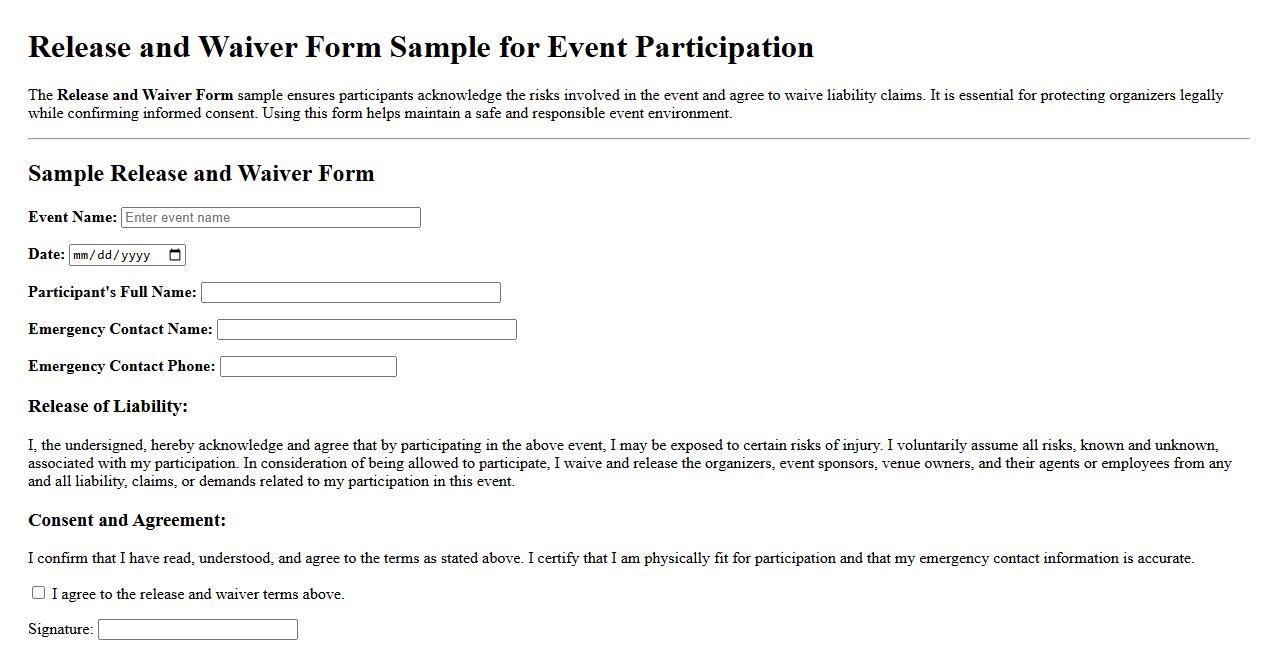
The Release and Waiver Form sample ensures participants acknowledge the risks involved in the event and agree to waive liability claims. It is essential for protecting organizers legally while confirming informed consent. Using this form helps maintain a safe and responsible event environment.
Release and Waiver Form Sample for Minors
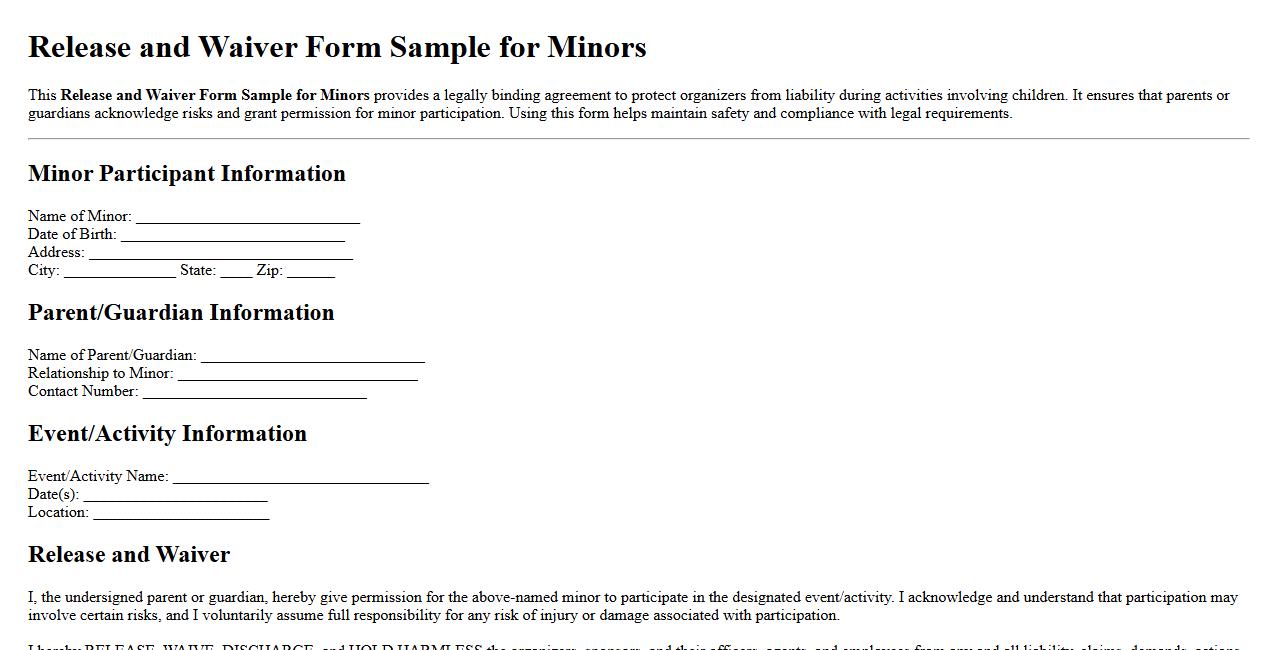
This Release and Waiver Form Sample for Minors provides a legally binding agreement to protect organizers from liability during activities involving children. It ensures that parents or guardians acknowledge risks and grant permission for minor participation. Using this form helps maintain safety and compliance with legal requirements.
Release and Waiver Form Sample for Photography
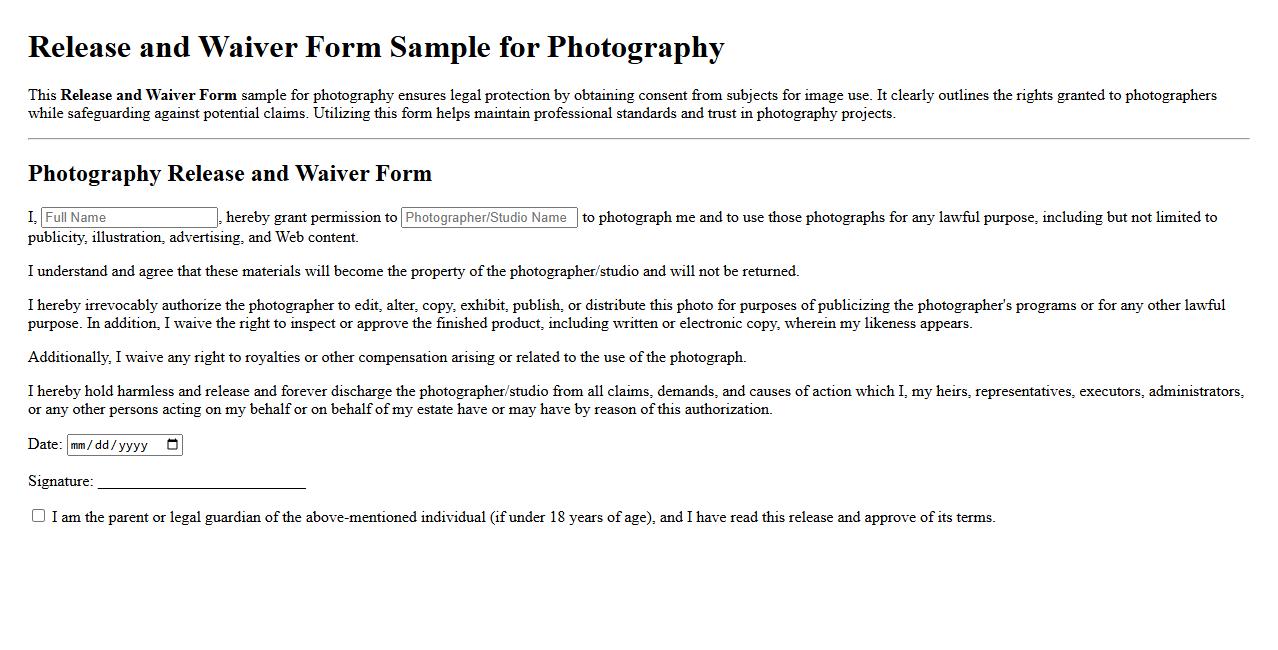
This Release and Waiver Form sample for photography ensures legal protection by obtaining consent from subjects for image use. It clearly outlines the rights granted to photographers while safeguarding against potential claims. Utilizing this form helps maintain professional standards and trust in photography projects.
Release and Waiver Form Sample for Volunteer Activities
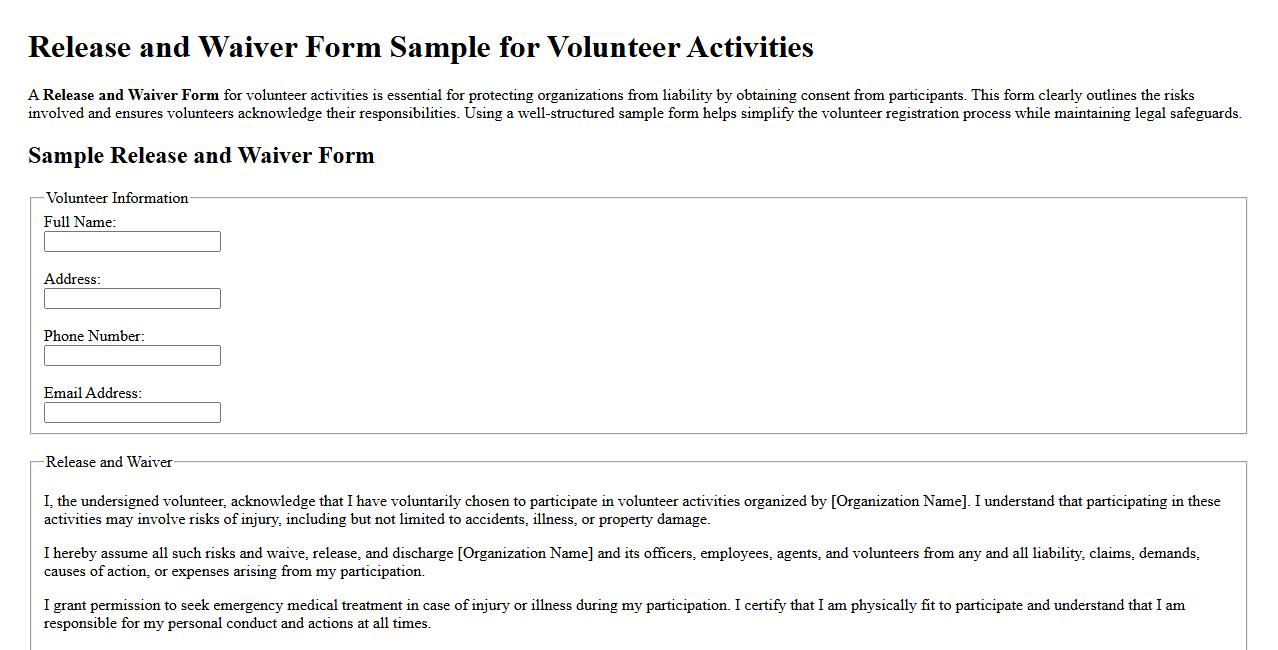
A Release and Waiver Form for volunteer activities is essential for protecting organizations from liability by obtaining consent from participants. This form clearly outlines the risks involved and ensures volunteers acknowledge their responsibilities. Using a well-structured sample form helps simplify the volunteer registration process while maintaining legal safeguards.
Release and Waiver Form Sample for Liability in Sports
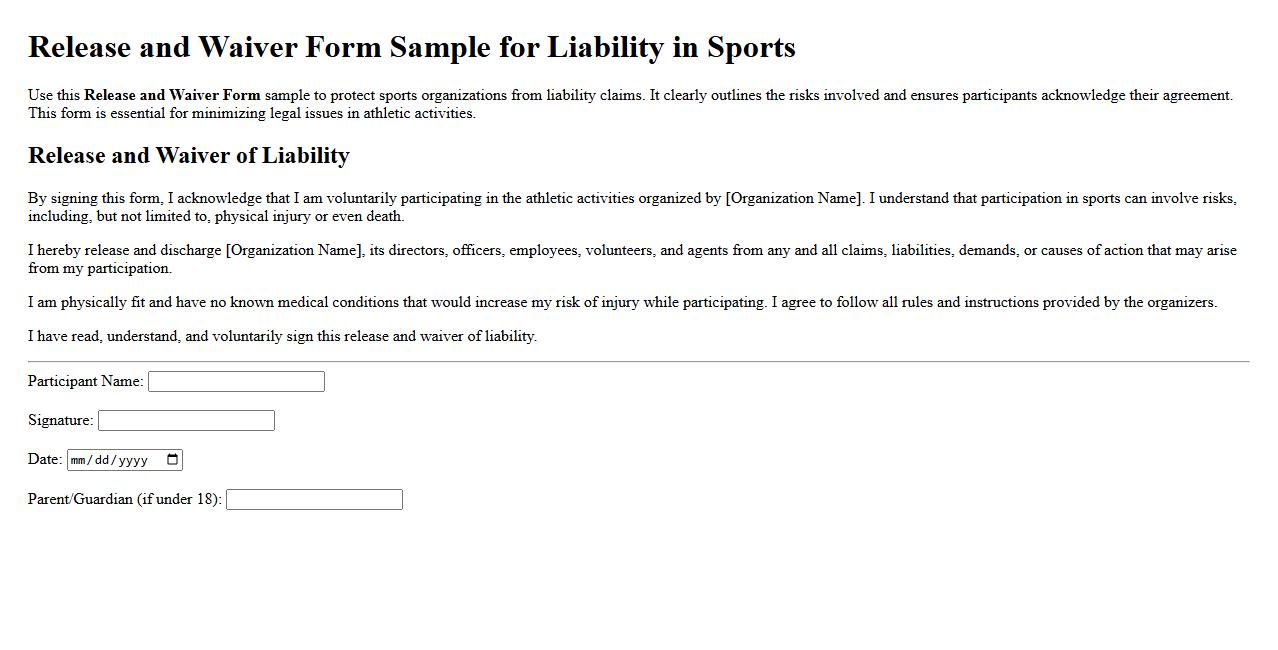
Use this Release and Waiver Form sample to protect sports organizations from liability claims. It clearly outlines the risks involved and ensures participants acknowledge their agreement. This form is essential for minimizing legal issues in athletic activities.
Release and Waiver Form Sample for Medical Treatment
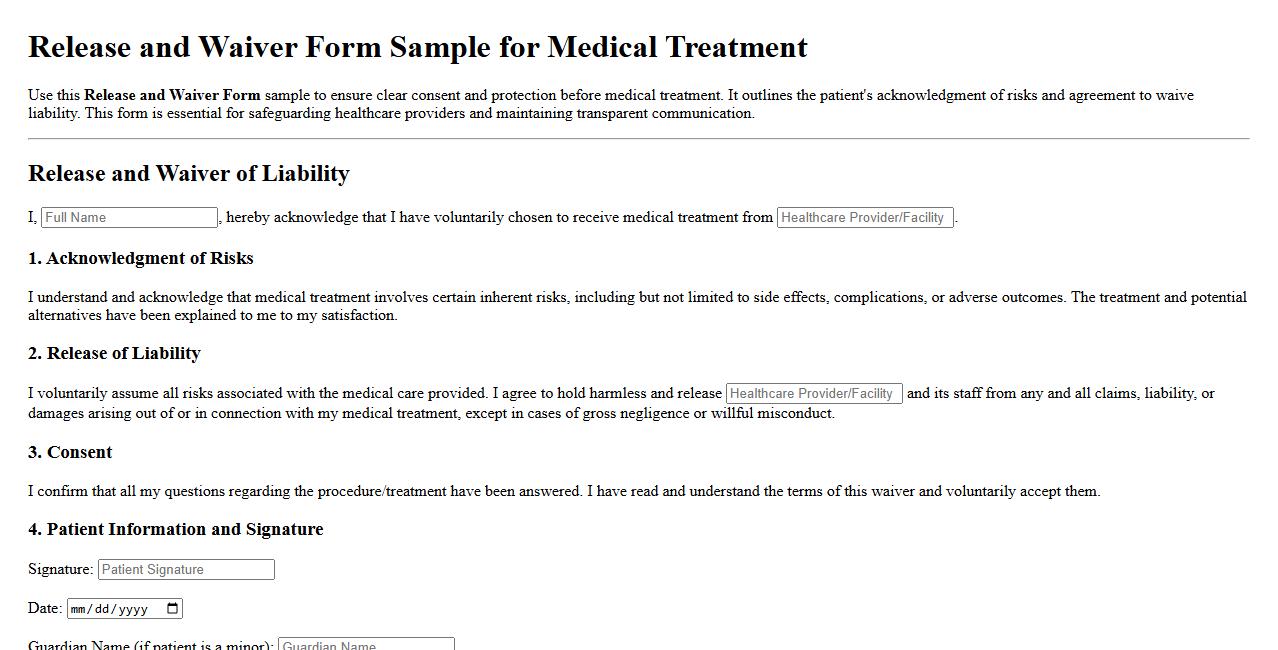
Use this Release and Waiver Form sample to ensure clear consent and protection before medical treatment. It outlines the patient's acknowledgment of risks and agreement to waive liability. This form is essential for safeguarding healthcare providers and maintaining transparent communication.
Release and Waiver Form Sample for Fitness Classes
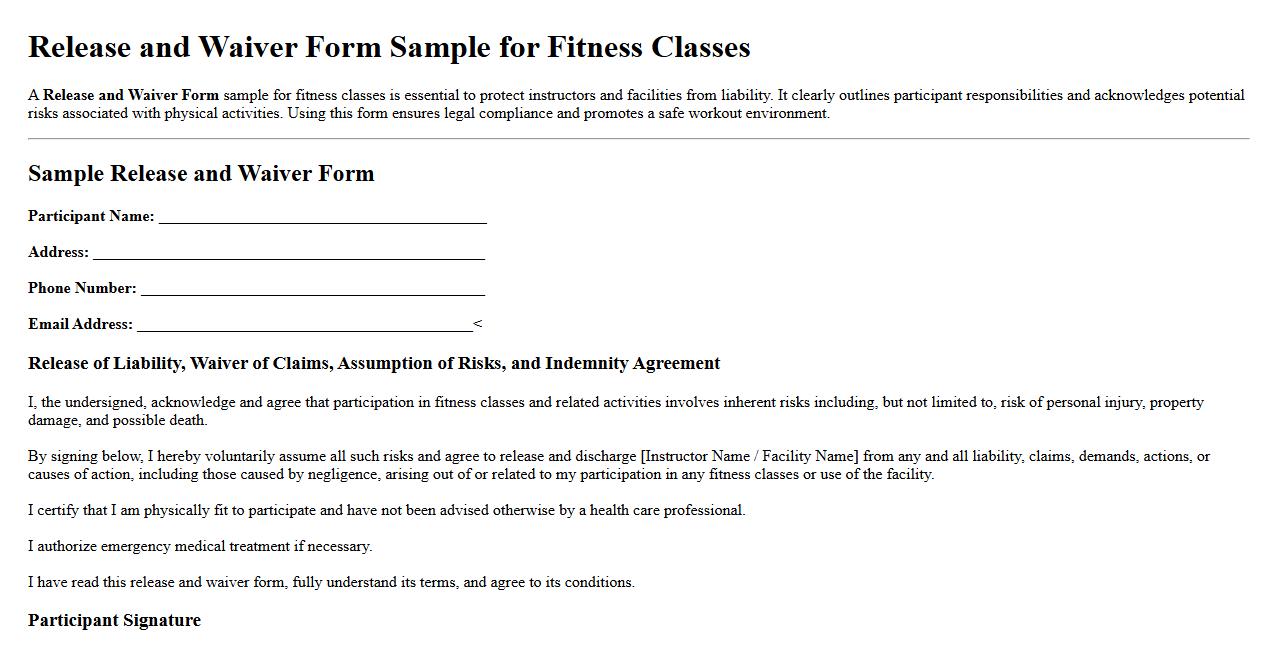
A Release and Waiver Form sample for fitness classes is essential to protect instructors and facilities from liability. It clearly outlines participant responsibilities and acknowledges potential risks associated with physical activities. Using this form ensures legal compliance and promotes a safe workout environment.
Release and Waiver Form Sample for Contractors
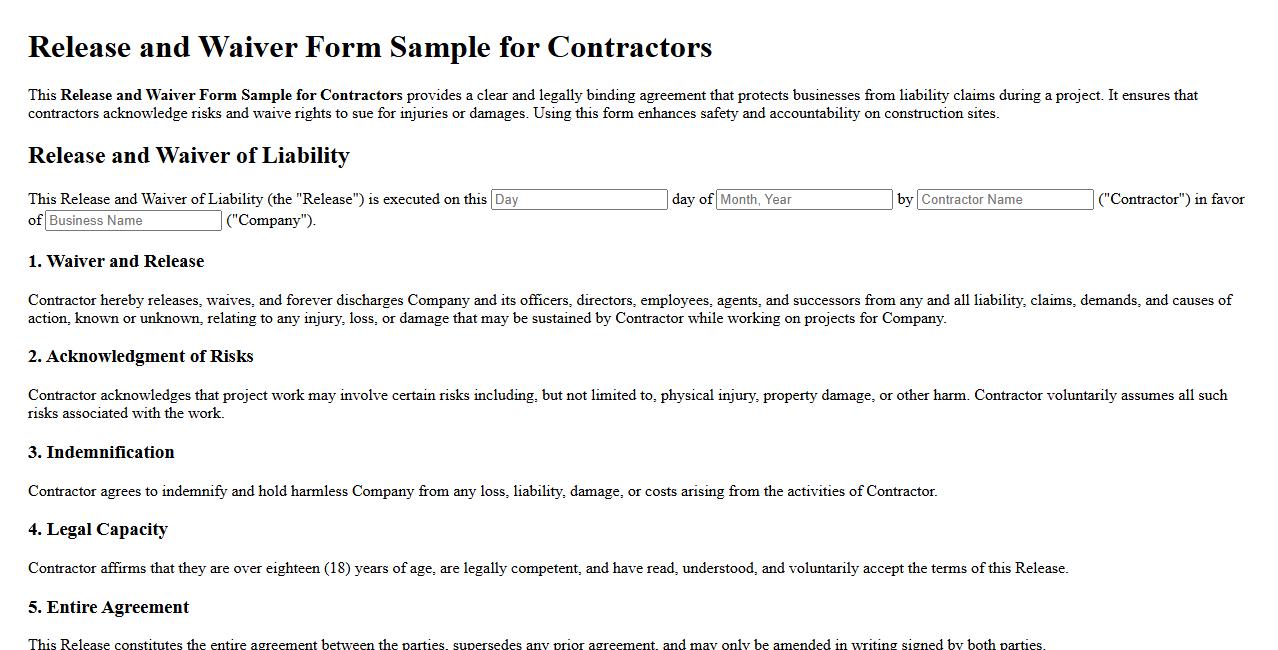
This Release and Waiver Form Sample for Contractors provides a clear and legally binding agreement that protects businesses from liability claims during a project. It ensures that contractors acknowledge risks and waive rights to sue for injuries or damages. Using this form enhances safety and accountability on construction sites.
Release and Waiver Form Sample for Car Accident Settlement
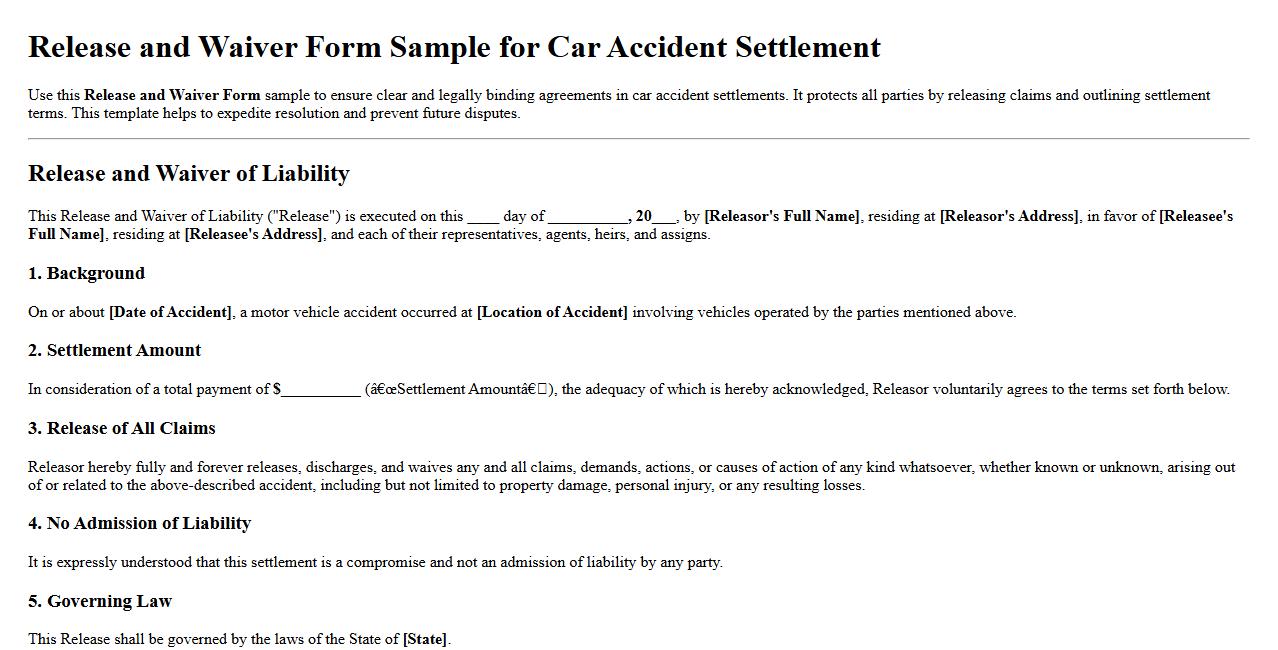
Use this Release and Waiver Form sample to ensure clear and legally binding agreements in car accident settlements. It protects all parties by releasing claims and outlining settlement terms. This template helps to expedite resolution and prevent future disputes.
Release and Waiver Form Sample for Property Damage
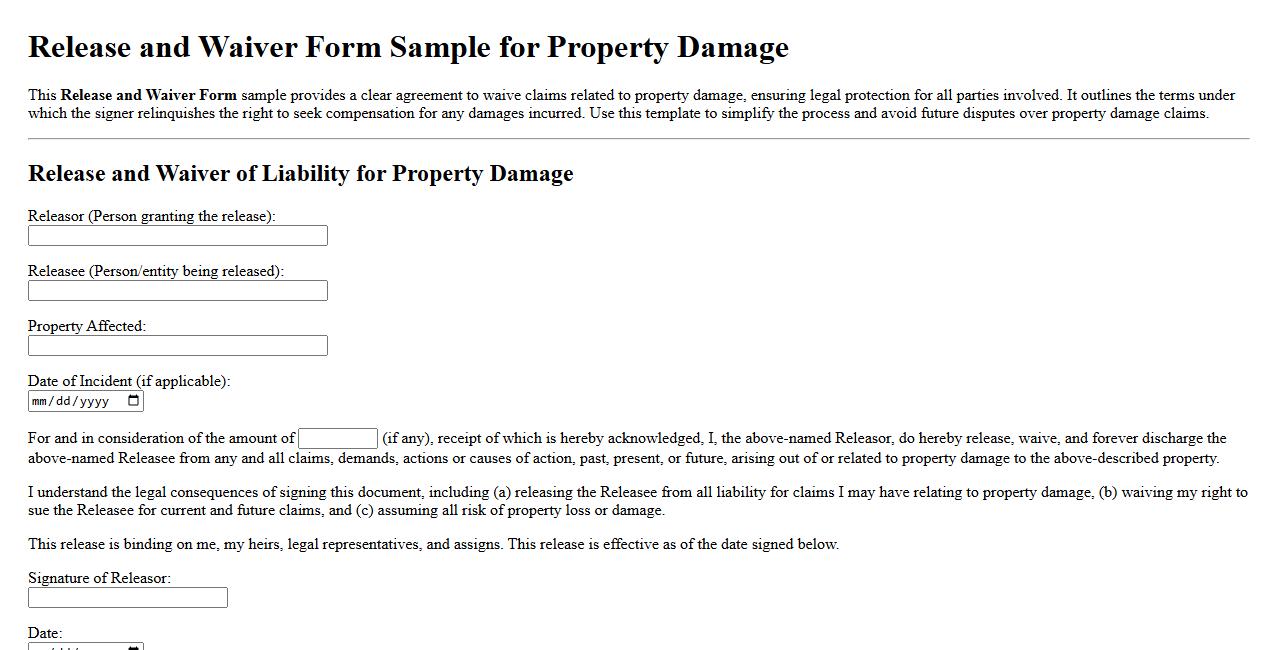
This Release and Waiver Form sample provides a clear agreement to waive claims related to property damage, ensuring legal protection for all parties involved. It outlines the terms under which the signer relinquishes the right to seek compensation for any damages incurred. Use this template to simplify the process and avoid future disputes over property damage claims.
What legal liabilities does the Release and Waiver Form specifically address?
The Release and Waiver Form primarily addresses liabilities related to bodily injury, property damage, and other personal losses that may occur during an activity or event. It aims to protect the organizer or provider from lawsuits resulting from negligence or accidents. This form legally outlines that the participant voluntarily assumes the risks associated with the activity.
Are electronic signatures valid on this Release and Waiver Form?
Yes, electronic signatures are generally valid on Release and Waiver Forms, provided they comply with the Electronic Signatures in Global and National Commerce (ESIGN) Act or similar state laws. These signatures hold the same legal weight as handwritten ones when properly executed. The form should include a statement confirming acceptance of electronic signatures for enforceability.
Does the form comply with state-specific release laws and requirements?
The Release and Waiver Form must be tailored to state-specific laws to ensure its enforceability, as release statutes vary across jurisdictions. Compliance includes specific language, limitations, and disclosures required by the state's legal framework. Consulting with legal professionals helps ensure that the form meets all relevant local requirements.
How does the form handle minors or participants under 18?
The form requires that a parent or legal guardian sign on behalf of any participant under the age of 18 to provide valid consent. It also typically includes a clause informing guardians of the potential risks involved. Protection is extended to the organization by ensuring minors cannot legally bind themselves, so guardian authorization is essential.
Can the waiver be revoked after signing, and under what conditions?
Typically, a signed waiver cannot be revoked once accepted, as it represents a contractual agreement between the parties. However, exceptions may occur if there is evidence of fraud, coercion, or significant changes in circumstances. The form may specify conditions under which revocation is permitted, although such cases are rare and usually require legal intervention.